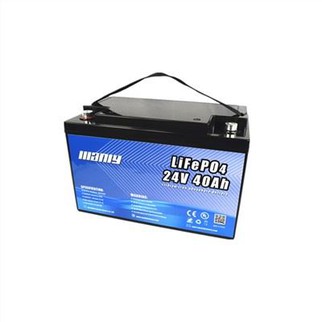
The difference between lithium batteries and lead-acid batteries is reflected in three aspects, namely cost, energy range and charging issues. In general, lead acid will be the more cost-effective product. The energy rich in lithium batteries will be stronger, that is, the same size, lithium batteries are rich in energy, and lithium batteries will charge faster.
Take lithium battery 12V 100AH as an example:
1. Cost
This is usually the topic of most concern to everyone and a key factor in deciding "what is the right product?" Typically, this is not a simple math problem, and the cost-benefit really depends on the needs of your application. Lead acid is a popular cost-effective battery chemistry that is available in large quantities without concern for security of supply and is available in a variety of off-the-shelf package sizes. Lead acid is ideal for large scale stationary applications where space is plentiful and energy requirements are low. But when you start thinking about price in terms of power or range, lithium-ion technology is often the more favorable option.
2. Energy and range
Comparing the two chemistries side by side, Li-ion has an energy density of 125-600+ Wh/L, while lead-acid batteries have an energy density of 50-90 Wh/L. In other words, if you drive the same distance with each type of battery in the same car, a lead-acid battery can be 10 times the volume of a lithium-ion battery, and it's also heavier. Thus, using lithium-ion batteries can free up space for other important payloads, such as more passengers on a bus or more packages in an electric delivery truck. The high energy density also provides the vehicle with a longer range, which means users don't need to recharge as often when powered by lithium-ion technology.
3. Charge
Charging a lead-acid battery can take more than 10 hours, while a lithium-ion battery can take anywhere from 3 hours to as little as a few minutes, depending on the size of the battery. Lithium-ion chemistry can accept faster current and charge faster than lead-acid batteries. This is critical for time-sensitive applications with high vehicle utilization and small rest intervals. For dock tractors, for example, every minute a vessel is in port has a financial impact on the fleet owner, so batteries must be charged quickly to load the vessel during breaks.