There are four main types of electric vehicle power batteries: lead-acid batteries, nickel-metal hydride batteries, nickel-cadmium batteries and lithium-ion batteries. Among them, the first three batteries have not been widely used due to their short battery life, and will gradually withdraw from the historical stage in the future. Although lithium power batteries have obvious performance advantages, due to the different electrode material systems used, their performances vary widely. The more mature positive material lithium cobalt oxide is basically not capable of producing large capacity and high power due to its poor safety. Possibility of power battery.
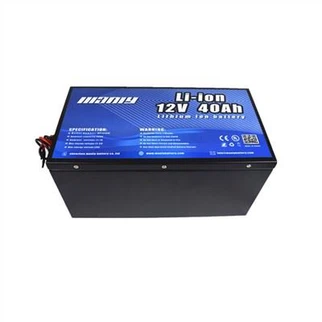
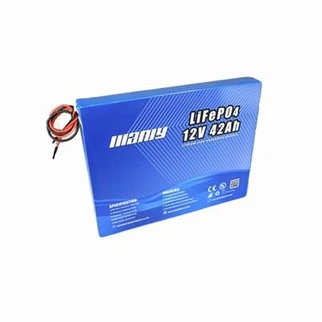
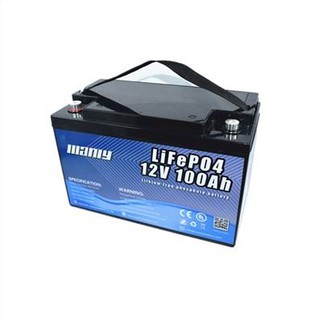
The lithium iron phosphate battery (Lifepo4 battery) has many advantages such as long cycle life, stable structure, good safety performance and low cost, and the lithium iron phosphate material does not contain any toxic and harmful substances, and will not cause any pollution to the environment, which is recognized by the world. It is a green battery material. Domestic and foreign battery technology research experts generally pointed out that lithium iron phosphate battery, as a power source, will become the most promising alternative to lead-acid, nickel-hydrogen, manganese, cobalt and other series batteries.
It is precisely because of the incomparable advantages of lithium iron phosphate battery (Lifepo4 battery) compared with other batteries, domestic and foreign car companies have seen. Lithium batteries are used in electric vehicles. The research and development of lithium iron phosphate began with the potential of lithium iron phosphate batteries, and lithium iron phosphate batteries were used in electric vehicles. The start time of research and development of lithium iron phosphate (Lifepo4 battery) is almost synchronized at home and abroad, and the speed of mass production in China even exceeds that of overseas. It is understood that as of 2011, BYD, as one of the first car companies in the world to realize the industrialization of lithium iron phosphate batteries, has invested a total of 1.201 billion yuan in Huizhou for the construction of lithium iron phosphate battery bases, and is the first to put The launch of lithium iron phosphate (Lifepo4 battery) electric vehicles on the market has fully demonstrated the performance advantages of batteries. The person in charge of State Grid Shanghai Company commented: "Compared with other electric vehicle companies, BYD's electric vehicles run the most stably and have the highest operating efficiency."
The performance of lithium-ion power batteries mainly depends on the positive and negative electrode materials. Lithium iron phosphate (Lifepo4 battery) has only appeared in recent years as a lithium battery material. July 2005. Its safety performance and cycle life are unmatched by other materials, and these are the most important technical indicators of power batteries. IC charge and discharge cycle life of 2000 times. Single-cell battery overcharge voltage 30V will not burn, puncture will not explode. The lithium iron phosphate cathode material makes large-capacity lithium-ion batteries easier to use in series. In order to meet the needs of frequent charging and discharging of electric vehicles. It has non-toxic, non-polluting, good safety performance, wide source of raw materials and convenient price. Long life and other advantages. It is a new-generation cathode material for potassium ion battery.
The positive electrode of lithium ion battery is lithium iron phosphate material, which has great advantages in safety performance and cycle life, which are also one of the most important technical indicators of power battery. IC charge and discharge cycle life can be achieved 2000 times, puncture does not explode, not easy to burn and explode when overcharged. Lithium iron phosphate cathode material makes large-capacity lithium-ion batteries easier to use in series.
Lithium Iron Phosphate Batteries* Battery Safety Issues
Lithium iron phosphate batteries are also dangerous. Because, lithium iron phosphate is also a lithium-ion battery. In terms of material principle, lithium iron phosphate is also an intercalation/deintercalation process, which is exactly the same as lithium cobalt oxide and lithium manganate.
The chemical properties of lithium are very active and it is easy to burn. When the battery is charged and discharged, the temperature inside the battery continues to heat up, the gas generated during the activation process expands, the internal pressure of the battery increases, and the pressure reaches a certain level. It will rupture, causing leakage, fire, and even explosion.
From the technical point of view, the lithium iron phosphate battery has a small improvement in the risk of battery, fire, explosion, etc., but it is not completely, and the risk is the same.
Li-ion battery charging
1. To charge the lithium-ion battery, a dedicated lithium-ion battery charger should be used.
2. The lithium-ion battery is charged in the "constant current/constant voltage" method.
3. Charging voltage: The maximum charging voltage is 4.2V*n (n: the number of batteries in series)
4. Charging current: The recommended charging current is 0.5C (such as a battery with a nominal capacity of 1500mAh, the charging current is 0.5*1500=750mAh)
5. Charging temperature: The battery should be charged within the range of 0°C-45°C.
Lithium-ion battery discharge
1. Discharge current: The discharge current should be 1.0C or less. (If you wish to discharge the battery with a current greater than 1.0C, please contact us)
2. Discharge temperature: The battery should be discharged (worked) within the temperature range of -20°C to +60°C.
3. Discharge termination voltage: The discharge termination voltage of the battery should not be less than 2.5V*n (n: the number of batteries in series). Over-discharge of the battery will shorten the battery life, and in severe cases will cause the battery to fail.
Lithium iron phosphate battery* storage method
The battery can be stored in a clean, dry and ventilated place with an ambient temperature of -5°C- -35°C and a relative humidity of not more than 75%.
Indoors, avoid contact with corrosive substances and keep away from fire and heat sources. The battery remains at 30% to 50% of its nominal capacity. It is recommended that stored batteries be charged every 6 months.
Lithium Iron Phosphate Raw Materials
Lithium iron phosphate: The material industry is a resource-based industry. Lithium resources around the world have basically been occupied by major companies. We believe that in the lithium resource industry, venture capital has lost the value of strategic entry. Phosphorus source compounds belong to the traditional chemical consumables and already have very mature suppliers. Relatively speaking, there is no domestic supplier of high-quality iron source compounds with an absolute advantage, and there are certain investment opportunities. Investors can pay attention to Shenzhen Shuotian Technology, Hefei Yalong and other leading companies in this field.
Domestic lithium iron phosphate (lifepo4 battery) cathode material manufacturers
At present, the well-known manufacturers of lithium iron phosphate materials in the world are mainly A123 in the United States, Phostech in Canada and Valence in the United States. These manufacturers have developed very mature mass production technology, the largest of which has a production capacity of more than 5,000 tons per year. Chinese companies have started the development of lithium iron phosphate materials since 2001. After 6 years, Peking University finally broke through a series of technical and engineering problems of lithium iron phosphate from laboratory technology to pilot production technology in 2007, and is improving In the relevant process, the safety of lithium iron phosphate batteries has been greatly improved and guaranteed, laying the foundation for the serialization and large-scale industrialization of lithium iron phosphate products. On the whole, the technical research and development level and industrialization level of lithium iron phosphate in China are basically in line with the international level. In terms of production capacity, China's material suppliers are similar to foreign manufacturers, and the price is lower than that of foreign countries, but the material processing performance and stability are slightly inferior. At this stage, there are more than 50 battery material manufacturers in the country, among which only Tianjin Strand, Peking University Xianxing, Suzhou Hengzheng and more than ten have actually entered into industrialized mass production. Although there are only a few companies with real supply capacity, it shows that Chinese companies have seized the opportunity of lithium battery development, making China's lithium battery industrialization in the forefront of the world. It can be seen that the products of all domestic lithium iron phosphate material manufacturers have their own advantages and disadvantages. No one manufacturer has an absolute advantage in technology, and no manufacturer can mass produce it on a large scale.