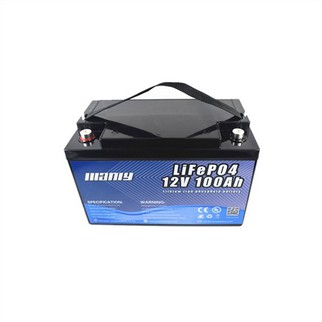
According to the industry media "photovoltaic magazine" reported, a few days ago, the latest survey report released by the market research agency Essin Huamai shows that, unlike other energy sectors, the new crown pneumonia epidemic and its related epidemic prevention measures did not hit the demand for household energy storage market, but rather attracted more households to buy and install household energy storage systems, and will be regarded as a financial investment. 2020, the global household energy storage new installed capacity scale Therefore, the trend has increased significantly.
Emerging Investment Approaches in Special Times
In 2020, the new crown pneumonia epidemic sweeps the world and most energy sectors are severely impacted, and the energy storage industry is no exception. Energy storage projects in many countries around the world have experienced some degree of delay in approval, procurement, transportation, and construction, resulting in a decline in the scale of new energy storage installations compared to the same period in 2019. However, the market for residential energy storage, a segment of the energy storage industry, is hot.
Michael Longson, an analyst at Essin Huamai, said that despite the slow growth rate of global household energy storage installations in the first quarter of 2020 due to the adverse factors generated by the New Crown Pneumonia epidemic, the sales and installed scale of global household energy storage products continued to grow as the public's investment in household energy storage increased in the latter three quarters.
Germany is a typical example, according to a survey by Essenwamer. Between the fourth quarter of 2018 and the third quarter of 2020, Germany has achieved eight consecutive quarters of YoY growth in the installed scale of household energy storage. In the first three quarters of last year, the installed scale of household energy storage in Germany even reached 850 MWh, with more than 90,000 households installed, already surpassing the 2019 full-year record of 741 MWh and 85,000 households.
Notably, the growth of the residential energy storage market is being driven by the closure of cities in various countries to prevent and control the New Crest Pneumonia outbreak, Michael Longson said, adding that people are beginning to divert funds from travel and vacations to the purchase and installation of residential energy storage due to travel restrictions. "This represents a household energy storage system that, in the eyes of the households, is not just part of the home energy system, but also a financial investment through which they hope to gain wealth."
Data from Axiomtek shows that in addition to Germany, Italy, the United Kingdom and other countries have also increased sales of household energy storage products.
Policy to further "ignite" the market
The sudden outbreak of Newcastle pneumonia has prompted people around the world to start looking at residential energy storage systems, providing a "shot in the arm" for the industry's development. But at a deeper level, the public's recognition of residential energy storage in various countries is closely related to the bonus policies introduced by governments.
According to Edson Huamai, subsidies have largely attracted people in various countries to invest in residential energy storage. Italy's Lombardy region has been an important potential installed market for residential energy storage, but due to city closures and other measures, the region has not seen a resurgence in the size of installed residential energy storage until the end of the second quarter of 2020. In response, the Italian government introduced a very attractive policy, not only announcing a new subsidy program, but also reducing taxes and fees, allowing the region's residential energy storage market to quickly rebound in the second half of 2020.
In order to recover or boost the economy, many countries and regions around the world have taken initiatives to eliminate the negative impact of the new crown pneumonia epidemic, not the least of which is support for the energy storage industry. For example, the Australian government released a renewable energy-focused package with a capital investment scale of more than $66 million, including support for the development of energy storage systems, etc.; the Austrian government opened a tax rebate specifically for small-scale light storage systems, with a proposed investment of 36 million euros.
The government's focus on the household energy storage market has also led to more renewable energy companies participating in the market. The capital market wants to exploit the value of residential energy storage more, thus also increased investment in the field. It is reported that the renewable energy company Swell Energy just last year received $450 million in financing to be used for the layout of the residential energy storage market.
Safety risks cannot be ignored
As policies continue to fuel market development, the installation of residential energy storage will become a new trend for investment in the residential sector in more and more countries, according to Exxon HCM. It is expected that the global installed capacity of household energy storage will maintain rapid growth in the future, and in 2021, the global installed capacity of household energy storage will increase by about 27% compared with that in 2020. Among them, the market prospects in Europe, East Asia and other countries are promising.
However, Esenwamer also reminds that although the market demand for household energy storage is high, some countries and regions are still facing security problems in the field of energy storage, which may have a negative impact on the development of the industry.
According to statistics, in 2020, there were six fire accidents caused by overheating energy storage batteries in the United States, and some batches of household energy storage systems were recalled. This led to the U.S. public's extra concern about the stability and reliability of household energy storage systems, thus affecting their enthusiasm to invest in household energy storage.
In this regard, several research institutions believe that in the future, as energy storage technology becomes more involved in the energy and capital markets and plays a greater role in the power grid, society will pay more attention to the development of energy storage technology and promote the upgrading of related technologies. Energy storage products will also be better able to cope with thermal runaway problems and inhibit the spread of risks.
At the same time, ExxonHarmony points out that the expansion of the market will also drive the progress of technology. In the future, lithium-ion battery technology will continue to mature, and the field of energy storage will also develop in combination with electric vehicles and virtual power plants to provide continuous development momentum.
If you have interests in energy storage batteries, please feel free to contact info@manlybattery.com, thank you.