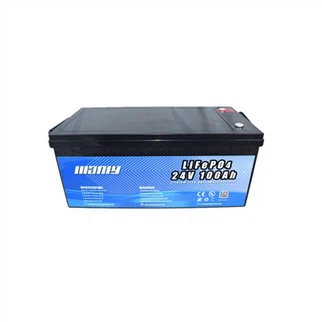
Among the complex processes involved in the production of lithium-ion batteries, it goes without saying that cycle performance is of paramount importance to the performance of lithium-ion batteries. On a macro level, a longer cycle life means less resource consumption. The cycle life of the battery is an important indicator to evaluate the performance of the battery.
Material type: The choice of material is an element that affects the performance of lithium-ion batteries. Choose a poor cycle performance of the material, the process is reasonable, made and perfect, the cycle of the cell is bound to be unable to guarantee; choose a better material, even if the subsequent made a slight problem, the cycle performance may not be too bad (a lithium cobalt acid gram play only about 135.5mAh/g and lithium precipitation of the cell, 1C although more than a hundred dives but 0.5C, 500 times 90% or more; A primary cell disassembled negative electrode with black graphite particles of the cell, the cycle performance is normal). From the material point of view, the cycle performance of a full battery is determined by the cycle performance of the positive electrode after matching with the electrolyte, the cycle performance of the negative electrode after matching with the electrolyte of the two, the worse one. The poor cycling performance of the material may be due to the rapid change of the crystal structure during the cycling process, which prevents the completion of lithium embedding and de-lithium, or due to the inability of the active material and the corresponding electrolyte to generate a dense and uniform SEI film, which causes the premature side reaction between the active material and the electrolyte and the premature consumption of the electrolyte, thus affecting the cycling. In the core design, if one pole is confirmed to be made of a material with poor circulation performance, the other pole does not need to be made of a material with better circulation performance, which is wasteful.
Compaction of positive and negative electrodes: Although high compaction of positive and negative electrodes can improve the energy density of the core, it will also reduce the cycling performance of the material to some extent. From theoretical analysis, the greater the compaction, equivalent to the greater the damage to the structure of the material, and the structure of the material is to ensure that the lithium-ion battery can be recycled; in addition, the positive and negative electrode compaction of higher cells is difficult to ensure a higher amount of liquid retention, and the amount of liquid retention is the basis for the completion of the normal cycle or more cycles of the cell.
Moisture: Too much moisture will react with the positive and negative electrode active substances, destroy their structure, and thus affect the cycle, and too much moisture is not conducive to the formation of SEI film. However, while traces of water are difficult to remove, traces of water can also ensure the performance of the core to some extent. Unfortunately, Wen Wu's personal experience in this area is almost zero, can not say much. Everyone interested can search the forum inside the information on this topic, or a lot.
Coated film density: a single variable to consider the impact of film density on the cycle is almost an impossible task. Inconsistencies in film density either bring about differences incapacity, or differences in the number of layers of core winding or lamination. For the same type of cell with the same capacity and material, lowering the film density is equivalent to adding one or more layers of winding or stacking, which corresponds to an increased diaphragm that can absorb more electrolytes to ensure cycling. Considering that a thinner film density can increase the multiplier performance of the cell, the baking and water removal of the electrode and bare cell will be easier, of course, the error in the coating may be more difficult to control with a too-thin film density, and the large particles in the active material may also negatively affect the coating and rolling, more layers mean more foil and diaphragm, which means higher cost and lower energy density. Therefore, a balanced consideration is also needed when evaluating.
Negative overload: In addition to the impact of first irreversible capacity and coated film density deviation, the impact on cycling performance is also a consideration for negative overload. For lithium cobaltate plus graphite system, it is more common for the negative graphite to become the "shortboard" in the cycling process. If the negative electrode is not sufficient, the core may not precipitate lithium before cycling, but after cycling hundreds of times, the positive electrode structure changes little but the negative electrode structure is severely damaged and cannot fully receive the lithium ions provided by the positive electrode, thus precipitating lithium and causing a premature drop in capacity.
Electrolyte quantity: There are three main reasons for insufficient electrolyte quantity to affect the cycle, one is an insufficient liquid injection, the second is sufficient liquid injection but insufficient aging time or insufficient dipping of positive and negative electrodes due to high compaction, and the third is that the electrolyte inside the core is consumed with the cycle. Insufficient liquid injection and insufficient liquid retention have been written by Wen Wu before, "the effect of electrolyte deficiency on the performance of the core", so I will not repeat it. For the third point, the microscopic manifestation of the match between positive and negative electrodes, especially the negative electrode and electrolyte, is the formation of dense and stable SEI, and the visible manifestation to the right eye is the consumption rate of electrolytes during the cycling process. An incomplete SEI film cannot effectively prevent the negative electrode from reacting with the electrolyte and thus consuming the electrolyte, and on the other hand, the defective part of the SEI film will regenerate the SEI film and consume the reversible lithium source and electrolyte as the cycle progresses. Whether it is for hundreds or even thousands of cycles or for tens of diving cells, if the electrolyte is sufficient before the cycle and has been consumed after the cycle, increasing the electrolyte retention is likely to improve the cycle performance to a certain extent.
Objective conditions of the test: the charge/discharge rate, cut-off voltage, charge cut-off current during the test, overcharge and over-discharge during the test, the temperature of the test room, sudden interruptions during the test, the internal resistance of the contact between the test point and the core, and other external factors will more or less affect the cycling performance test results. In addition, the sensitivity of different materials to the above objective factors varies, unified test standards and understanding of common and important material characteristics should be sufficient for daily work.
Conclusion: Like the barrel principle, the final decisive factor among the many factors that affect the cycling performance of the core is the shortest of the many factors. At the same time, there is an interaction between all these influencing factors. With the same material and manufacturing capacity, higher cycle time often means lower energy density, so it is important to find the right combination to meet the customer's needs and ensure the consistency of the cores.