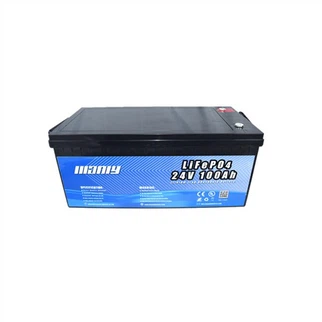
The best-selling models are replaced with lithium iron phosphate batteries
Driven by the Tesla Model 3, more and more celebrity best-selling models are scrambling to install lithium iron phosphate! Among several new car-making forces such as Weilai and Ideal, Xiaopeng Motors took the lead in launching the lithium iron phosphate version; the industry predicts that it will also be a high probability event for Weilai and Ideal to launch the lithium iron phosphate version in the future.
Recently, Xiaopeng Motors launched the P7 rear-drive standard endurance model, which uses a lithium iron phosphate battery from the Ningde era and has a comprehensive range of 480km. Under the same configuration, the lithium iron phosphate version is 20,000 yuan cheaper than the ternary lithium battery version. At the same time, there is also a lithium iron phosphate version of Xiaopeng G3. Not only Xiaopeng, but Great Wall Euler announced the official launch of the Euler Black Cat Cute Pet Edition at the beginning of this year. Its battery pack has been replaced with a lithium iron phosphate battery from the original ternary battery.
According to relevant statistics, in 2020, six of the top 10 new energy vehicles sold in the Chinese market will be released with lithium iron phosphate versions. Tesla Model 3, BYD? Needless to say, the popular high-end models such as Han, and the low-end best-selling "National God Vehicles" such as Wuling Hongguang Mini EV with an average monthly sales volume of more than 30,000 vehicles also use lithium iron phosphate batteries.
Recently, Tesla CEO Musk said that he will consider supporting lithium iron phosphate batteries in more electric vehicles. At present, the Tesla (Shanghai) factory standard battery life version Model 3 has all been switched to iron-lithium batteries. Musk’s statement this time means that he will mass-produce the standard battery life version Model 3 in the United States and other factories outside of China, or Replace all of them with lithium iron phosphate batteries.
Once upon a time, the market share of lithium iron phosphate was as low as 12.8%. Today, with the advantages of higher safety and lower cost, lithium iron phosphate is realizing a counterattack to the ternary. In 2020, the sales of ternary batteries in the Chinese market was 34.8GWh, a year-on-year decrease of 34.4%; the sales of lithium iron phosphate batteries was 30.8GWh, a year-on-year increase of 49.2%.
In the Catalogue of Recommended Models for the Promotion and Application of New Energy Vehicles (first batch in 2021) issued by the Ministry of Industry and Information Technology, the proportion of lithium iron phosphate battery models has reached 78%. In addition to traditional special vehicles still choosing to carry lithium iron phosphate batteries, The proportion of lithium iron phosphate batteries in passenger cars has also increased from the previous highest of 40% to 50%. Obviously, the power battery industry pattern is undergoing drastic changes, and lithium iron phosphate batteries will usher in a new trend of rising.
Price increase! Out of stock! In short supply
According to industry insiders, 2021 will usher in a big year of growth in demand for lithium iron phosphate batteries, which is expected to increase by 80% year-on-year. In order to keep up with the order progress, many battery manufacturers' production lines are running at full capacity. Penghui Energy stated that the company's power battery continues to be shipped, the power battery production line has been fully produced, and sales continue to increase. The power batteries for new energy vehicles produced and sold by the company are all lithium iron phosphate batteries. Guoxuan High-Tech also said that the company is working overtime to increase the output of lithium iron batteries.
In fact, due to the continued strong downstream demand, the supply of lithium iron phosphate materials is also very tight. Many manufacturers are in a hurry and out of stock occur from time to time. Some leading manufacturers of lithium iron phosphate materials have even stopped accepting new orders.
"Leading companies no longer offer external quotations, because the orders in hand are too full, and the production capacity is obviously insufficient." According to industry insiders, the monthly demand of CATL and BYD exceeded 40,000 tons, which has greatly exceeded expectations. Demand.
It is understood that the lithium iron phosphate production capacity of German Nano, Hunan Yuneng, Beterui, Wanrun New Energy, and other companies are currently quite tight. "Currently, there is a structural shortage of lithium iron phosphate supply and demand, and the market gap still exists, and the supply exceeds demand." The relevant staff of German Nanotech said.
From the data point of view, the statistical output of lithium iron phosphate in my country in January 2021 reached 20,630 tons, while only 4,660 tons in the same period last year, an increase of 342.7% year-on-year. But even so, the output of lithium iron phosphate is still in short supply.
Although companies are also expanding production quickly, "far water does not quench the thirst of near." According to industry analysts, from the perspective of the production expansion of lithium iron phosphate material companies, the release of new capacity will have to wait until the second quarter at the earliest, and large-scale production may be at the end of the year or early next year, and iron phosphate cannot be relieved in the short term. Lithium is relatively in short supply.
It is worth noting that the surge in demand for lithium iron phosphate has triggered a series of price increases. According to the data of the business agency, on March 3, the lithium iron phosphate materials of Defang Nano and Beterui jumped by 3,500 yuan/ton and 4,000 yuan/ton respectively. As of March 3, the average price of domestic power-type premium lithium iron phosphate was 43,000 yuan/ton, an increase of 16.22% compared to the average market price of 37,000 yuan/ton in January, an increase of 6,000 yuan/ton.
From the other end, as the price of lithium carbonate, the main raw material for the production of lithium iron phosphate, has continued to soar in recent months, the cost of lithium iron phosphate manufacturers has also been under high pressure. Recently, it has been reported that lithium iron phosphate material companies have issued price increase letters to customers.
However, the price increase letter has not yet targeted all customers. According to industry insiders, the execution price of some companies for large customers has not changed. "This price increase letter is mainly for small and medium customers. Large customers usually sign long orders or use formula pricing to make adjustments with reference to the prices of major raw materials such as lithium carbonate."
Currently, lithium iron phosphate materials are really hard to find. According to relevant reports, since February this year, due to the suspension of production by individual companies (or due to material cost pressure), the relationship between supply and demand has deteriorated. Battery manufacturers have sent personnel to "supervise production" within lithium iron phosphate material companies. The more common.
Lithium iron phosphate is powerful and continues to ferment
Inquiring into it, the popularity of lithium iron phosphate does have an inherent logic. Although the ternary battery has the advantage of high energy density, it also has problems. Musk has expressed his worries more than once. As the demand for power batteries increases, nickel prices are subject to greater volatility and uncertainty. "Nickel metal is the biggest problem with lithium battery production capacity." In addition, the high price of cobalt is also annoying.
Compared with the ternary battery, the production cost of the raw materials required for the lithium iron phosphate battery is very low, and the output is very large. It is understood that the use of waste acid, ferrous sulfate, and waste materials generated during the production of titanium dioxide can be further processed to produce lithium iron phosphate. Therefore, in the long run, lithium iron phosphate batteries do not have to worry about the supply of raw materials.
According to industry estimates, the use cost of lithium iron phosphate is about 0.08 yuan/Wh, which can save 0.15 yuan/Wh compared to ternary cathode materials. In addition, with the continuous maturity of technology, lithium iron phosphate has "changed fate". The promotion and application of CTP technology and blade battery technology can both reduce costs and increase the system energy density of lithium iron phosphate batteries. The future market Competitiveness will continue to increase.
Judging from the current market situation, lithium iron phosphate's "later power" is becoming more and more obvious. With the blessing of Tesla, BYD, Xiaopeng, Great Wall Euler and other star car companies, the future lithium iron phosphate counterattack against the three yuan "I'm afraid it will increase. The industry expects that BMW, Volkswagen, and Daimler will also launch lithium iron phosphate solutions in the future.
Once the "domino effect" is turned on, it will be unacceptable.