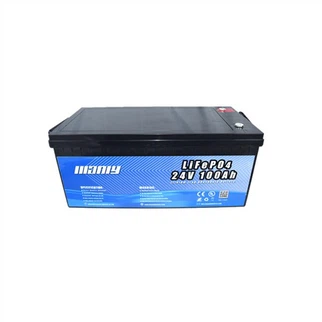
Principle of Lithium Battery Charging Circuit
1,Lithium batteries and Ni-Cd and Ni-MH rechargeable batteries:
The negative electrode of a lithium-ion battery is a graphite crystal, and the positive electrode is usually lithium dioxide. During charging, lithium ions move from the positive electrode to the negative electrode and are embedded in the graphite layer. When discharging, lithium ions depart from the surface of the negative electrode in the graphite crystal and move to the positive electrode. Therefore, during the charging and discharging process of the battery, lithium always appears in the form of lithium ions, rather than in the form of metallic lithium. So this kind of battery is called a lithium-ion battery, or a lithium battery for short.
Lithium batteries have the advantages of small size, large capacity, lightweight, no pollution, high single-cell voltage, low self-discharge rate, and many battery cycles, but they are more expensive. Nickel-cadmium batteries are being phased out due to low capacity, serious self-discharge, and pollution to the environment. Ni-MH battery has a higher cost performance and does not pollute the environment, but the single voltage is only 1.2V, so the scope of use is limited.
2, The characteristics of lithium batteries:
1. Higher weight-to-energy ratio and volume-to-energy ratio;
2, the voltage is high, the voltage of a single lithium battery is 3.6V, which is equal to the series voltage of three nickel-cadmium or nickel-metal hydride rechargeable batteries;
3, self-discharge is small and can be stored for a long time, this is the most prominent advantage of the battery;
4. No memory effect. Lithium batteries do not have the so-called memory effect of nickel-cadmium batteries, so there is no need to discharge lithium batteries before charging;
5. Long life. Under normal working conditions, the number of charge/discharge cycles of lithium batteries is far greater than 500;
6. It can be charged quickly. Lithium batteries can usually be charged with a current of 0.5 to 1 times the capacity, shortening the charging time to 1 to 2 hours;
7. It can be used in parallel at will;
8. Because the battery does not contain heavy metal elements such as cadmium, lead, mercury, etc., it has no pollution to the environment and is the most advanced green battery in the contemporary era;
9. High cost. Compared with other rechargeable batteries, lithium batteries are more expensive.
3, The internal structure of lithium battery:
Lithium batteries usually have two appearances: cylindrical and rectangular.
The inside of the battery adopts a spiral wound structure, which is made of a very fine and highly permeable polyethylene film separator between the positive and negative electrodes. The positive electrode includes a lithium-ion collector composed of lithium and cobalt dioxide and a current collector composed of the aluminum thin film. The negative electrode is composed of a lithium-ion collector made of sheet carbon material and a current collector made of copper thin film. The battery is filled with an organic electrolyte solution. In addition, a safety valve and PTC components are installed to protect the battery from damage when the battery is in an abnormal state or output short circuit.
The voltage of a single-cell lithium battery is 3.6V, and the capacity cannot be infinite. Therefore, single-cell lithium batteries are often processed in series or parallel to meet the requirements of different occasions.
4, the charging and discharging requirements of lithium batteries;
1. Lithium battery charging: According to the structural characteristics of the lithium battery, the highest end-of-charge voltage should be 4.2V, and it cannot be overcharged. Otherwise, too many lithium ions from the positive electrode will be taken away and the battery will be scrapped. The charging and discharging requirements are relatively high, and a dedicated constant current and constant voltage charger can be used for charging. Normally, the constant current charge to 4.2V/cell will switch to a constant voltage charge. When the constant voltage charges current drops to less than 100mA, the charge should be stopped.
Charging current (mA)=0.1~1.5 times battery capacity (such as 1350mAh battery, its charging current can be controlled between 135~2025mA). The normal charging current can be selected at about 0.5 times the battery capacity, and the charging time is about 2 to 3 hours.
2. Lithium battery discharge: Due to the internal structure of the lithium battery, all lithium ions cannot move to the positive electrode during discharge. Some lithium ions must be retained in the negative electrode to ensure that lithium ions can be inserted into the channel smoothly during the next charge. Otherwise, the battery life will be shortened accordingly. In order to ensure that some lithium ions remain in the graphite layer after discharge, it is necessary to strictly limit the minimum discharge termination voltage, which means that the lithium battery cannot be over-discharged. The final discharge voltage is usually 3.0V/cell, and the minimum should not be lower than 2.5V/cell. The length of battery discharge time is related to battery capacity and discharge current. Battery discharge time (hours) = battery capacity/discharge current. Lithium battery discharge current (mA) should not exceed 3 times the battery capacity. (Such as 1000mAH battery, the discharge current should be strictly controlled within 3A) Otherwise, the battery will be damaged.
The current lithium battery packs sold on the market are equipped with a matching charge and discharge protection board. Just control the external charge and discharge current.
5, Protection circuit of lithium battery:
The charging and discharging protection circuit of two lithium batteries is shown in Figure 1. It consists of two field-effect transistors and a dedicated protection integrated block S-8232. The overcharge control tube FET2 and the over-discharge control tube FET1 are connected in series in the circuit, and the battery voltage is monitored and controlled by the protection IC. When the battery voltage rises to 4.2V, The overcharge protection tube FET1 is turned off, and charging is stopped. In order to prevent malfunction, a delay capacitor is generally added to the external circuit. When the battery is in a discharging state when the battery voltage drops to 2.55V, the over-discharge control tube FET1 is cut off, and the power supply to the load is stopped. Over-current protection is to control FET1 to cut off and stop discharging to the load when a large current flows through the load. The purpose is to protect the battery and the field-effect tube. Overcurrent detection uses the on-resistance of the field-effect tube as the detection resistance, monitors its voltage drop, and stops discharging when the voltage drop exceeds the set value. A delay circuit is generally added to the circuit to distinguish between surge current and short-circuit current. The circuit has perfect functions and reliable performance, but it is highly professional, and the dedicated integrated block is not easy to buy, and it is not easy to imitate by amateurs.
6, Simple charging circuit:
Now many businesses sell single-cell lithium batteries without charging boards. With its superior performance and low price, it can be used for maintenance and replacement of self-made products and lithium battery packs, so it is loved by the majority of electronics enthusiasts. Interested readers can refer to Figure 2 to make a charging board. The principle is: use a constant voltage to charge the battery to ensure that it will not be overcharged. The input DC voltage is 3 volts higher than the voltage of the charged battery. R1, Q1, W1, and TL431 form a precision adjustable voltage regulator circuit, Q2, W2, and R2 form an adjustable constant current circuit, and Q3, R3, R4, R5, and LED are charging indication circuits. As the voltage of the battery to be charged increases, the charging current will gradually decrease. After the battery is fully charged, the voltage drop on R4 will decrease, so that Q3 will be turned off and the LED will go out. To ensure that the battery is sufficient, please continue after the indicator light goes out Charge for 1-2 hours. Please install suitable radiators for Q2 and Q3 when using. The advantages of this circuit are: simple production, easy purchase of components, safe charging, intuitive display, and will not damage the battery. By changing W1, you can charge multiple lithium batteries in series, and changing W2 can adjust the charging current in a wide range. The disadvantage is no over-discharge control circuit.
7, Application examples of single-cell lithium battery
1, as a replacement for battery pack maintenance
There are many battery packs: such as those used in laptop computers, after repairs, it is found that when this battery pack is damaged, it is only a problem with individual batteries. You can choose a suitable single-cell lithium battery for replacement.
2, make a highlight mini flashlight
The author once used a single 3.6V1.6AH lithium battery with a white ultra-high brightness light-emitting tube to make a miniature flashlight, which is easy to use, compact and beautiful. And because of the large capacity of the battery, it is used for half an hour per night on average, and it has been used for more than two months and still does not need to be charged. The circuit is shown in Figure 4.
3, instead of a 3V power supply
Because the voltage of a single-cell lithium battery is 3.6V. Therefore, only one lithium battery can replace two ordinary batteries to power small household appliances such as radios, walkmans, cameras, etc., which is not only light in weight but also long in continuous use.
8,Storage of lithium battery:
Lithium batteries need to be fully charged before storage. It can be stored for more than half a year at 20°C, which shows that lithium batteries are suitable for storage at low temperatures. Someone once suggested storing the rechargeable battery in the refrigerator, which is indeed a good idea.
9, use matters needing attention:
The lithium battery must not be disassembled, drilled, punctured, sawed, pressurized, heated, otherwise, it may cause serious consequences. Lithium batteries without a charging protection board cannot be short-circuited, and are not suitable for children to play with. Keep away from flammable materials and chemicals. Discarded lithium batteries should be disposed of properly. Fourth, the charging and discharging requirements of lithium batteries;
1. Lithium battery charging: According to the structural characteristics of the lithium battery, the highest end-of-charge voltage should be 4.2V, and it cannot be overcharged. Otherwise, too many lithium ions from the positive electrode will be taken away and the battery will be scrapped. The charging and discharging requirements are relatively high, and a dedicated constant current and constant voltage charger can be used for charging. Normally, the constant current charge to 4.2V/cell will switch to a constant voltage charge. When the constant voltage charges current drops to less than 100mA, the charge should be stopped.
Charging current (mA)=0.1~1.5 times battery capacity (such as 1350mAh battery, its charging current can be controlled between 135~2025mA). The normal charging current can be selected at about 0.5 times the battery capacity, and the charging time is about 2 to 3 hours.
2. Lithium battery discharge: Due to the internal structure of the lithium battery, all lithium ions cannot move to the positive electrode during discharge. Some lithium ions must be retained in the negative electrode to ensure that lithium ions can be inserted into the channel smoothly during the next charge. Otherwise, the battery life will be shortened accordingly. In order to ensure that some lithium ions remain in the graphite layer after discharge, it is necessary to strictly limit the minimum discharge termination voltage, which means that the lithium battery cannot be over-discharged. The final discharge voltage is usually 3.0V/cell, and the minimum should not be lower than 2.5V/cell. The length of battery discharge time is related to battery capacity and discharge current. Battery discharge time (hours) = battery capacity/discharge current. Lithium battery discharge current (mA) should not exceed 3 times the battery capacity. (Such as 1000mAH battery, the discharge current should be strictly controlled within 3A) Otherwise, the battery will be damaged.
Note: Lithium battery packs currently on the market are equipped with matching charge and discharge protection boards. Just control the external charge and discharge current. Lithium battery charging circuit design:
1. Trickle charging stage. (Under the condition of excessive battery discharge and low voltage)
3.0V or less. The media inside the lithium battery will undergo some physical changes, resulting in deterioration of charging characteristics and reduced capacity. At this stage, the lithium battery can only be charged slowly through a trickle, and the dielectric inside the lithium battery slowly returns to its normal state.
2. Constant current charging stage. (The battery has recovered from the over-discharged state to the normal state)
A pin outside the IC is determined by an external resistor. The resistance value is calculated according to the formula on the datasheet of the charge management IC.
3. Constant voltage charging stage (has been fully charged to more than 85%, and will be replenished slowly)
When the capacity of the lithium battery reaches 85% (approximately), it must enter the slow charging stage again. Make the voltage rise slowly. Finally reached the highest voltage of the lithium battery 4.2V.
BAT pin output, this BAT is connected to the lithium battery terminal. At the same time, this pin is also the voltage test pin of the lithium battery. Lithium battery charge management IC judges the various states of the battery by detecting this pin.
5V is sent to the switch SW2 through D2, and sent to the lithium battery through the charge management ICMCP73831. The voltage at the left point of SW2 is 5V-0.7V=4.3V. Because the voltage of the lithium battery is lower than the voltage at the left point of SW2 by 4.3V, no matter when it is fully charged or not. So D1 is cut off. The charge management IC normally charges the lithium battery.
D2 and D1, the rear LDORT9193 is directly connected to the BAT pin output, it will cause a misjudgment when the charging IC is powered on. There will be a 5V external power supply connected, but the lithium battery will not be charged, and the LED indicator of the charging management IC will not be correct. The subsequent load LDO will not get the normal input voltage (the input voltage is very small). In this case, as long as the voltage input pin of the charging management IC is directly short-circuited to the BAT pin, all states are normal, charging can proceed, and the subsequent load LDO is also working normally.
When the IC is powered on, it needs to detect the status of the BAT, and connect the input pin of the LDO to the branch that connects the BAT to the positive pole of the lithium battery, which will affect the working status of the BAT pin, causing the charging management IC to enter Trickle charging stage. Short-circuit the BAT pin and the voltage input of the charging management IC to make the voltage of the BAT pin forcibly increase, so that the charging management IC judges that the lithium battery has entered the constant current charging stage, so it outputs a large current. It can drive LDO and so on.
D1 and D2 should use diodes with small voltage drop. Such as germanium diode, Schottky diode, MOSFET switch tube. In designs that require battery switching, a diode with a forward voltage drop of 10mV and no reverse leakage current is a "luxury demand" of designers. But so far, Schottky diode is still the best choice, its forward voltage drop is between 300mV to 500mV. But for some battery switching circuits, even choosing Schottky diodes cannot meet the design requirements. For a high-efficiency voltage converter, the energy saved may be completely wasted by the forward voltage drop of the diode. In order to effectively conserve battery energy in low-voltage systems, power MOSFET switches should be selected instead of diodes. The MOSFET with SOT package and on-resistance of only tens of milliohms can be ignored at the current level of portable products.
MOSFET to switch the power supply, it is best to compare the diode turn-on voltage drop, MOSFET turn-on voltage drop, and battery voltage, and regard the ratio of voltage drop to battery voltage as efficiency loss. For example, if a Schottky diode with a forward voltage drop of 350mV is used to switch Li+ batteries (nominal value 3.6V), the loss is 9.7%. If it is used to switch two AA batteries (nominal value 2.7V), The loss is 13%. In low-cost designs, these losses may be acceptable. However, when a high-efficiency DC-DC is used, the cost of the DC-DC must be weighed against the cost of the efficiency improvement brought by upgrading the diode to a MOSFET.
For MOSFET, the discharge characteristics of the battery used in the product must also be considered. The discharge characteristics of lithium batteries are as follows:
When a lithium battery consumes 90% of its power at room temperature, the voltage will still remain around 3.5V. Choose a better LDO device. Then at 3.5V, the output voltage will still be stable at 3.3V.
LDORT9193, when the load resistance is 50 ohms and the load current is 60mA, the relationship between the input voltage and the output voltage is shown in the following table:
2.8V2.65V
3.4v3.3V
4.0V3.0V
Even when the lithium battery consumes 90% of the power, the output of the LDO can still output 3.3V stably. From the power supply circuit analysis of A210 in Figure 1, after adding the silicon diode D1, the LDO input voltage = 3.5---0.7 V=2.8V. So as long as the module is programmed to work at around 2.4V, silicon diodes can also be used in this circuit. In terms of circuit performance, using germanium diodes or Schottky diodes is the best choice.